
 04
3365 7585
04
3365 7585 Refer To Us

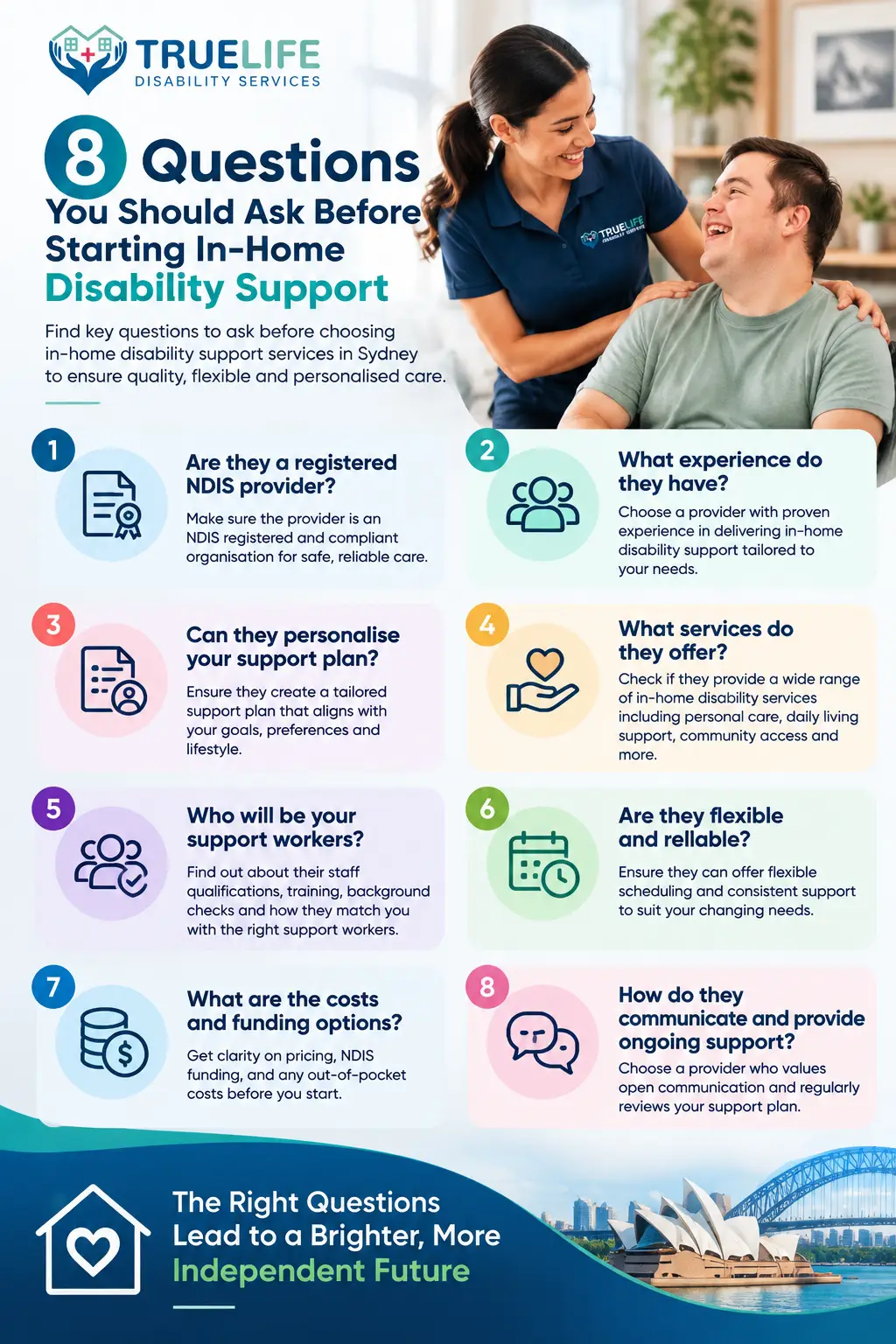
Starting the right care journey requires careful planning and understanding your options. Choosing home care support can help individuals receive assistance that respects their lifestyle, independence and personal goals. Before selecting a provider, families should review services, care approaches and support flexibility.
Finding an experienced provider is equally important when making care decisions. True Life Disability Services helps individuals explore personalised solutions designed around their unique needs and preferences.
How Do Support Assessments Work?
Support assessments identify a person’s daily requirements, goals and preferred level of assistance. A qualified provider reviews personal care needs, mobility, routines and safety considerations to develop a suitable support plan.
For people seeking NDIS in home support sydney, assessments help connect funded services with individual goals and approved requirements.
What Services Match Your Needs?
Before choosing a provider, ask about the available services and whether they match your lifestyle. Options may include personal assistance, household tasks, community participation and social support.
Reliable disability home care services should focus on improving independence while providing practical assistance that fits everyday routines.
How Are Carers Selected?
Understanding the recruitment process helps you choose a trustworthy provider. Ask whether support workers have suitable training, experience and required checks before providing care.
Quality in home disability support depends on skilled carers who understand personal preferences and deliver respectful assistance.
Can You Change Support Workers?
A positive relationship with your support worker is essential. Ask whether you have the option to request a different worker if your needs or preferences change.
A flexible provider should support your choices and ensure you feel comfortable with the person assisting you.
How Flexible Are Service Schedules?
Your routine may include appointments, personal activities or changing responsibilities. Ask how easily service times can be adjusted to suit your lifestyle.
Flexible disability home support allows individuals to receive assistance when they need it while maintaining control over their daily schedule.
What Happens If Your Needs Change?
Care requirements can change over time due to new goals, health considerations or lifestyle adjustments. Ask how often your support plan is reviewed and updated.
A dependable provider offering disability care at home should adapt services to ensure ongoing comfort, safety and independence.
How Do Providers Measure Care Quality?
Understanding quality checks helps you choose a reliable service provider. Ask how feedback is collected, how carers are monitored and how improvements are made.
Professional providers delivering home lifecare services use regular reviews to maintain high standards and improve client experiences.
Supporting Everyday Independence
The right provider should offer services that encourage confidence and independence. Ask about practical assistance, communication methods and how support is personalised.
Accessible home help for disabled individuals should focus on making daily activities easier while respecting personal choices.
Final Remarks
Selecting disability support requires asking the right questions about care quality, flexibility and personalisation. True Life Disability Services provides home care support designed to support individual goals and improve everyday living experiences.
Choosing suitable services ensures that support remains reliable, respectful and aligned with changing needs.
Get Started With Your Support Journey
For professional disability support solutions, contact True Life Disability Services today. Call 04 3365 7585 or email truelifedisability@gmail.com to discuss your requirements and available care options.
Frequently Asked Questions
Can in-home disability support help me become more independent instead of doing everything for me?
Yes. Quality in-home disability support is designed to encourage independence rather than create dependency. Support workers can assist with daily routines, skill development, household tasks and community participation while allowing individuals to make their own choices and build confidence.
How do providers match me with a support worker who understands my personality and lifestyle?
A good disability support provider considers your communication style, interests, cultural preferences, daily routines and personal goals before matching you with a support worker. The right connection helps create trust, comfort and a more personalised care experience.
Can I receive support at home if my needs are complex or change frequently?
Yes. Many providers can adjust support plans as your circumstances, abilities or goals change. Regular reviews help ensure your care remains suitable, whether you need assistance with daily activities, personal care or other disability-related requirements.
What makes in-home disability support different from traditional care arrangements?
Unlike fixed care settings, in-home disability support allows individuals to receive assistance in a familiar environment. This approach can provide greater flexibility, personal choice and support that fits around everyday routines, goals and lifestyle preferences.
Can I change my support plan if my goals or daily needs are different from when I started?
Yes. Support plans should evolve with your changing circumstances. If your goals, abilities or daily requirements change, you can discuss adjustments with your provider to ensure your services continue meeting your needs.
Does in-home disability support only include personal care, or can it support everyday living goals too?
In-home disability support can include much more than personal care. Depending on individual needs and funding arrangements, it may include assistance with household activities, building life skills, accessing the community and working towards personal independence goals.

