 04
3365 7585
 Refer To Us
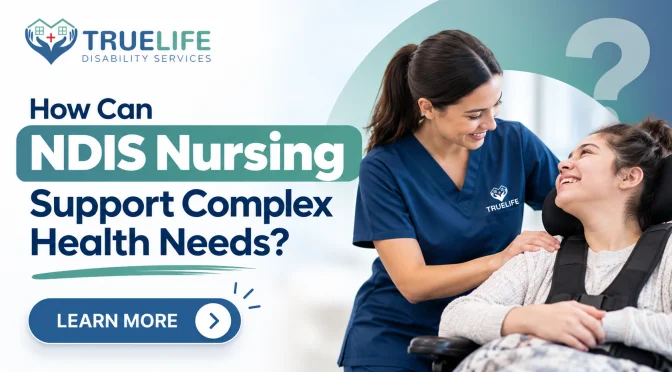
Not every health need can be managed with a helping hand alone, some require a trained clinical eye. That’s the space NDIS community nursing fills, and it’s reshaping how participants with complex conditions live their everyday lives. True Life Disability Services sees this shift firsthand: fewer hospital corridors, more comfort at home, and care that finally moves at the pace of real life instead of appointment schedules.
What Makes a Health Need “Complex”
Complex health needs go beyond daily support tasks. Think wound care that needs a nurse’s precision, catheter and stoma management, tube feeding, medication schedules that can’t afford a missed dose, or respiratory support that requires constant attention. These aren’t tasks a support worker is trained to handle, they call for a registered nurse who understands both the clinical detail and the person behind it.
Why This Kind of Nursing Support Actually Matters
Here’s the shift: instead of treating the home as a waiting room between hospital visits, community nursing turns it into the primary place of care. Fewer trips to emergency departments. Lower infection risk. A participant who gets to heal, manage, and live in familiar surroundings instead of a clinical ward. For anyone managing chronic illness, recovering from surgery, or living with a degenerative condition, that difference is enormous.
What Is Actually Included
A capable disability service provider delivering nursing support usually focuses on the real, everyday needs behind a health condition rather than a one-size-fits-all checklist. This typically covers ground like:
- Regular health checks and ongoing health monitoring
- Medication management support
- Mobility assistance for daily activities
- Support for managing chronic or complex health conditions
- Personal care nursing woven into daily routines
- Assessments that guide how care is delivered over time
Behind each of these is a qualified nurse working in step with support coordinators, making sure care always ties back to the participant’s actual NDIS plan and goals, not a generic checklist.
Why Personalisation Is Not Optional
No two health journeys look the same, so NDIS community nursing Sydney teams start with a proper health assessment before anything else. From there, a care plan takes shape: what’s needed, how often, and who’s delivering it. As health changes, so does the plan, because static care plans rarely serve dynamic health conditions.
The Families Behind the Care
Often overlooked, but always present: the family carer quietly managing tasks they were never trained for. Bringing in professional disability support services takes that weight off their shoulders while also equipping them with the knowledge to step in confidently when a nurse isn’t in the room. It’s support that extends past the participant to the people holding everything together at home.
Fewer Emergencies, Better Outcomes
Consistent community nursing care does something quietly powerful: it catches problems early. A wound checked on schedule. The medication was managed correctly. A warning sign spotted before it becomes a crisis. The result is fewer avoidable hospital admissions and a healthcare experience that feels proactive instead of reactive.
Picking a Provider Who Can Actually Deliver This
Complex nursing care is not something every provider can safely offer. Look for registered nurses with real clinical experience, honest communication, flexible availability, and a genuine willingness to collaborate with allied health professionals. The best providers treat nursing as part of the whole person’s care story, not a bolt-on service.
Final Remarks
Complex health needs deserve care that’s clinically sharp and genuinely personal, and that’s precisely what quality NDIS community nursing delivers. True Life Disability Services stays committed to that standard, helping participants stay safe, comfortable, and confidently independent at home.
Your Health, Our Priority
Looking for NDIS community nursing in Sydney families can genuinely trust? True Life Disability Services is here to help. Our skilled nursing team delivers safe, compassionate, and personalised care for complex health needs. Call 04 3365 7585 or email truelifedisability@gmail.com to start your care journey today.
Frequently Asked Questions
How Is Nursing Support Different From Regular Disability Support?
Nursing support is delivered by a qualified nurse and focuses on health-related needs, while general disability support usually covers daily living, personal care, and community access without clinical involvement.
Do I Need A Doctor’s Referral To Access Nursing Support?
Not always. Depending on your situation, you may be able to access support through your NDIS plan directly, though a referral from a doctor or planner can sometimes help guide the process.
Can Nursing Support Be Delivered Alongside Other Ndis Services?
Yes. Nursing support is often coordinated with other supports like personal care or community participation, so everything works together under one overall care plan.
How Often Will A Nurse Visit?
Visit frequency depends entirely on individual health needs and is usually determined after an initial assessment, then reviewed regularly as circumstances change.
Is Nursing Support Only For Older Participants?
No. Nursing support is available to NDIS participants of any age who have health needs requiring clinical attention, not just older individuals.
What Happens During The First Nursing Assessment?
A qualified nurse typically reviews your current health situation, discusses your goals, and identifies the type and frequency of support that would suit you best.
Can Nursing Support Change If My Health Needs Change Over Time?
Yes. Care plans are designed to be reviewed and adjusted, so the level of nursing support can increase or decrease as your health circumstances evolve.

